CueBack provides talking points for your transactional fundraising, such as phonathons. For your relationship fundraising, we provide discovery and insights to help Major, Principal, and Planned Gift Officers develop personalized cultivation strategies.
CueBack is designed to help VPs create a culture of philanthropy by building connections between Advancement and other stakeholders (alumni relations, career services, recruiting, etc.), and get their buy-in.
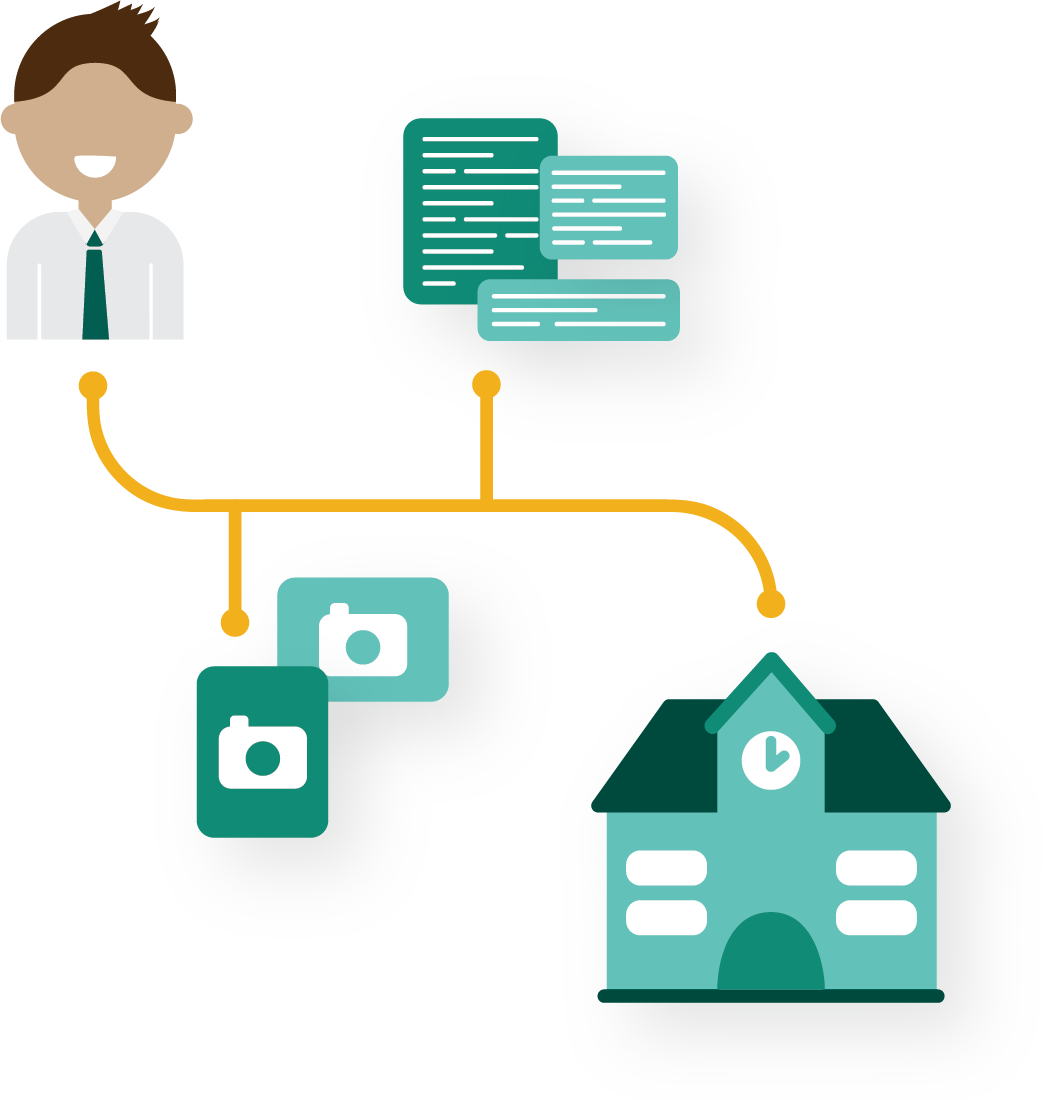
On CueBack, you can create life-long relationships with your alumni to build a scalable and predictable fundraising pipeline. To reduce the time-to-productivity for new gift officers and build institutional memory, supplement contact reports with a digital record of your prospects’ interests, connections, and behavior.
CueBack is purpose-built to help with your low volume, high touch, and high value relationship fundraising by increasing the probability of a gift, gift size, and gifting velocity. Influence a prospect’s willingness to give by uncovering what they care about, who they care about, and why.
Our Dynamic ConnectionsTM report maps relationships which can be leveraged to help you convert willingness to gifts. By automating the discovery process and uncovering actionable cultivation insights, CueBack enables your major gift officers to spend more time with more prospects.
Using moves management strategies tailored to each alum, your institution can accelerate gifting velocity by moving high value prospects more quickly through the donor pipeline.
CueBack is a force multiplier for your high volume, low touch and low value transactional fundraising by increasing the probability of a pledge. Our platform provides personalized talking points to help your phonathon callers quickly establish trust and rapport with prospects.
CueBack’s predictive analytics model utilizes hundreds of quantitative and qualitative attributes to generate a dynamic Willingness ScoreTM for each prospect. CueBack goes beyond traditional capacity measurements to more accurately segment potential donors.

You can’t increase a prospect’s capacity to give, but you can increase their willingness to give.
CueBack gives gift officers game-changing qualitative information to convert willingness into gifts. Our numerous Cultivation ReportsTM go beyond data to provide actionable insights.
On average, 10% of alumni data becomes inaccurate every year. We make sure that your data is up-to-date to prevent leakage in the donor pipeline.
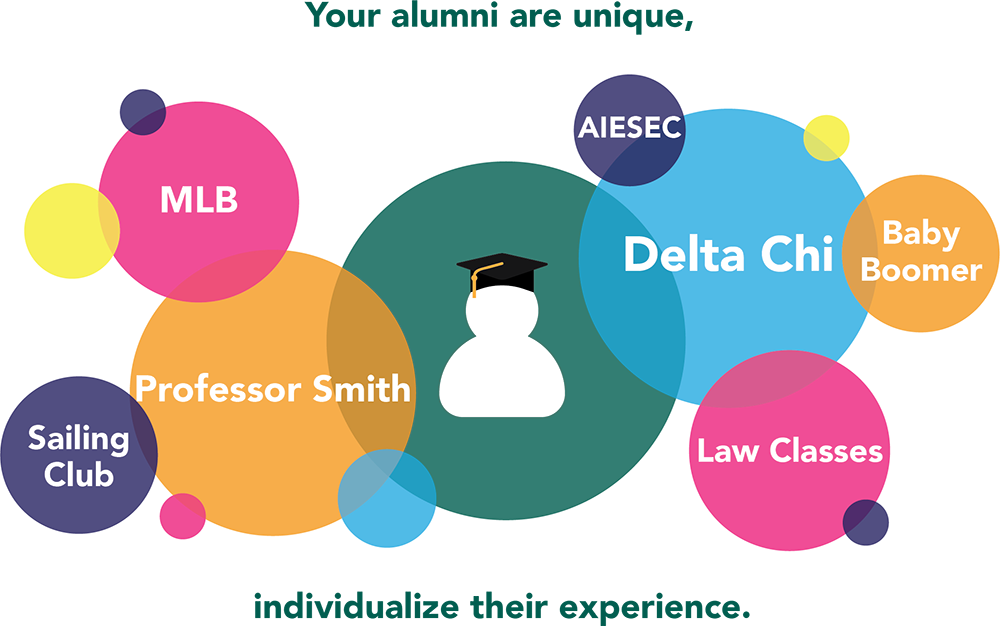
Find out which experiences were the most memorable and formative in shaping their alumni identity.
Alumni identity (how each alumni views their university experience in shaping their self-concept) has been shown by current research to be one of the most important factors that affect giving. Despite the value to be gained by understanding alumni identity, uncovering this information across tens or hundreds of thousands of alumni is a daunting task for advancement professionals. Leverage technology and the power of AI to generate individual alumni identity reports.
Fortunately, when alumni share stories on CueBack, your alumni relations and advancement professionals can easily understand the experiences, people, and traditions that were meaningful to each graduate. When alumni voluntarily share meaningful, long-form content on CueBack, they give your university a powerful insight into their personal identity. Your university can then harness the most memorable components of alumni’s college experience to improve asks, appealing to fundamental principles of identity to encourage giving.
Learn how experiences at your institution shaped each alumni’s professional life.
The education provided by your university and the connections made there helped your alumni further their careers.
By using targeted prompts such as “How did your degree help you in your profession?” you encourage older alumni to share valuable advice with younger generations, while simultaneously reminding them of how their time at your university impacted their career.
Younger alumni will benefit from their older counterparts’ professional advice, as well as opportunities such as mentoring that can be provided within the site. At the same time, older alumni will appreciate the opportunity to share their wisdom with younger generations.
Discover which staff and friends impacted each alumni’s life, and why.
For example, a custom prompt could be displayed to a specific subset of alumni that asks “How did Professor Ikeda’s class impact your professional life?” The responses garnered by this prompt could be used for a purpose-driven fundraising campaign. For example, alumni who responded that Professor Ikeda had a meaningful impact on their life could be targeted to donate to a scholarship in Professor Ikeda’s name.
In another example, a 50 year anniversary event for a college radio station included a celebration of the life of an influential member of the station who had recently passed away. Alumni who shared memories of this person on CueBack in the lead up to this event are higher probability prospects for giving back to the radio station in his name to continue his legacy.
By discovering what is important to your alumni, your university can maximize the effectiveness of its giving campaigns.
Leverage deep insights into individual behavior, affinities, interests, and motivations to develop stronger, personal relationships with prospects.
As your alumni move through their personal and professional lives, their priorities change. A recent graduate will prioritize external values such as internships, networking, and career connections, and seek out such opportunities from your institution. However, as your alumni get older, they experience a crucial shift from external to internal priorities. For example, Baby Boomer alumni will care little about connecting with your university for career advice. Instead, older alumni look to engage in ways that meet their priorities for internal and emotional fulfillment.
If your university wants to maintain engagement with these older, high-value alumni, it needs to offer them the benefit of meaningful emotional connection. Seeing an old photograph or a memory shared by a long-lost college friend will elicit the kind of positive emotion that is treasured by your alumni—and remind them of the value of your institution.
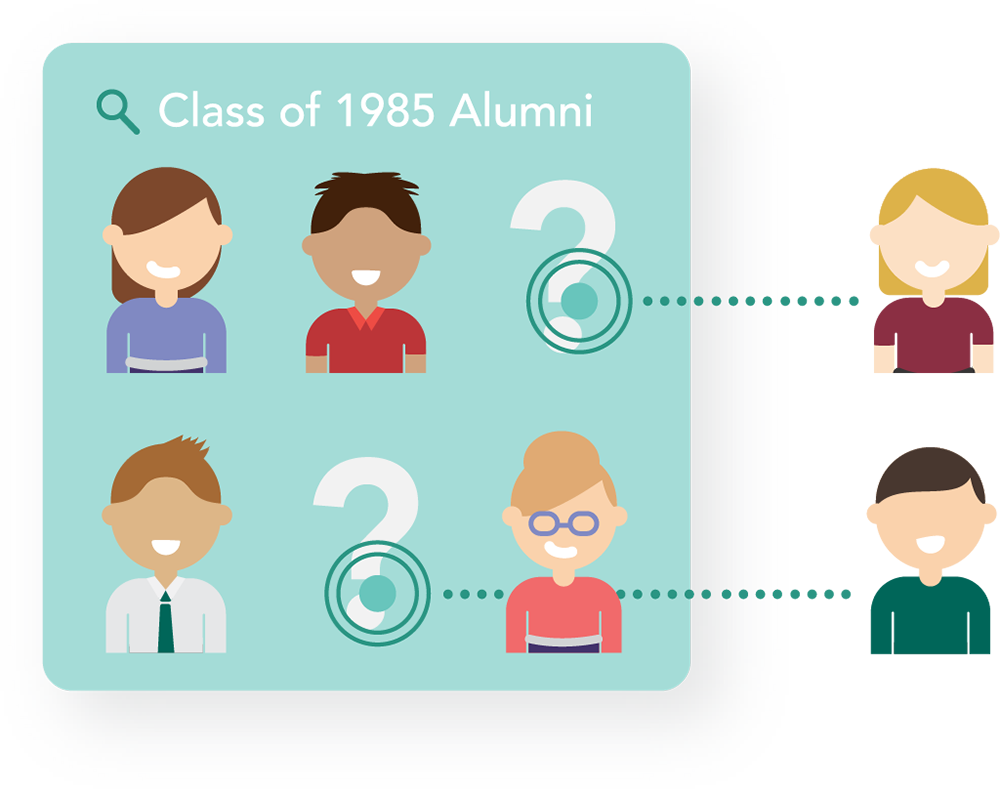
How many of your alumni are out-of-touch? How many could be donors? Increase your potential donor pool by unleashing the power of crowdsourcing. Leverage your existing alumni network to improve the completeness and accuracy of your constituent database.
Almost all alumni databases have problems with missing, incomplete, or inaccurate data. Obtaining quality information about older alumni is often the biggest challenge because they graduated before the widespread adoption of email and CRM systems.
According to Kevin MacDonnell of Dalhousie University, the percentage of valid emails retained by a university for people who graduated from 2007-2011 is 80%. On the other hand, the median percentage of known emails for alumni who graduated between 1970 and 1977 is only 48%---leaving 52% of that potential donor cohort uncontactable.
The problem is compounded because your older alumni are also the most valuable---they have a greater capacity to give financially and to contribute more to your university’s brand equity. They may be lost, but all is not lost. It is possible to reconnect with those high-value alumni.
Employ the power of crowdsourcing, by tapping into your alumni rather than paying a third party. Not only does having friends on the site encourage more alumni to use the platform, but the information they provide will be invaluable to getting back in touch with your alumni base.
Use detailed information about individual prospect behavior, willingness, connections, affinities, interests, and motivations to inform your moves management.
In business it is often said “It’s not what you know, but who you know”. Uncover which alumni are connected to each other and how, and use that knowledge to develop highly effective cultivation strategies.
For example, universities see many alumni with a high capacity to give—touting a substantial income and an impressive job title—who inexplicably have not given much to the university in the past. In such a scenario, your university could run a report to see if one of these alumni is connected with any of your top donors. If you see that the alumni and a top donor are friends from their time on the college football team, you can gift a VIP game seat to your top donor and ask them to invite their less-engaged counterpart.
Getting a potential high-value alumni to return to campus and attend a spirited event could do wonders in reminding that alumni of what your university gave them. By uncovering and leveraging the power of social connection, your university will speak to alumni on a personal level, increasing giving in the process.